Basalt canyons, thousands of waterfalls, rivers and lakes, and a silence that only exists north of the Arctic Circle — the northernmost plateau in the world, so remote that much of it remains unexplored to this day. It's a landscape hard to describe in words until you're standing in it.
A short primer on the place you'll be walking through with me — its geology, its wildlife, and the people who have walked through it.
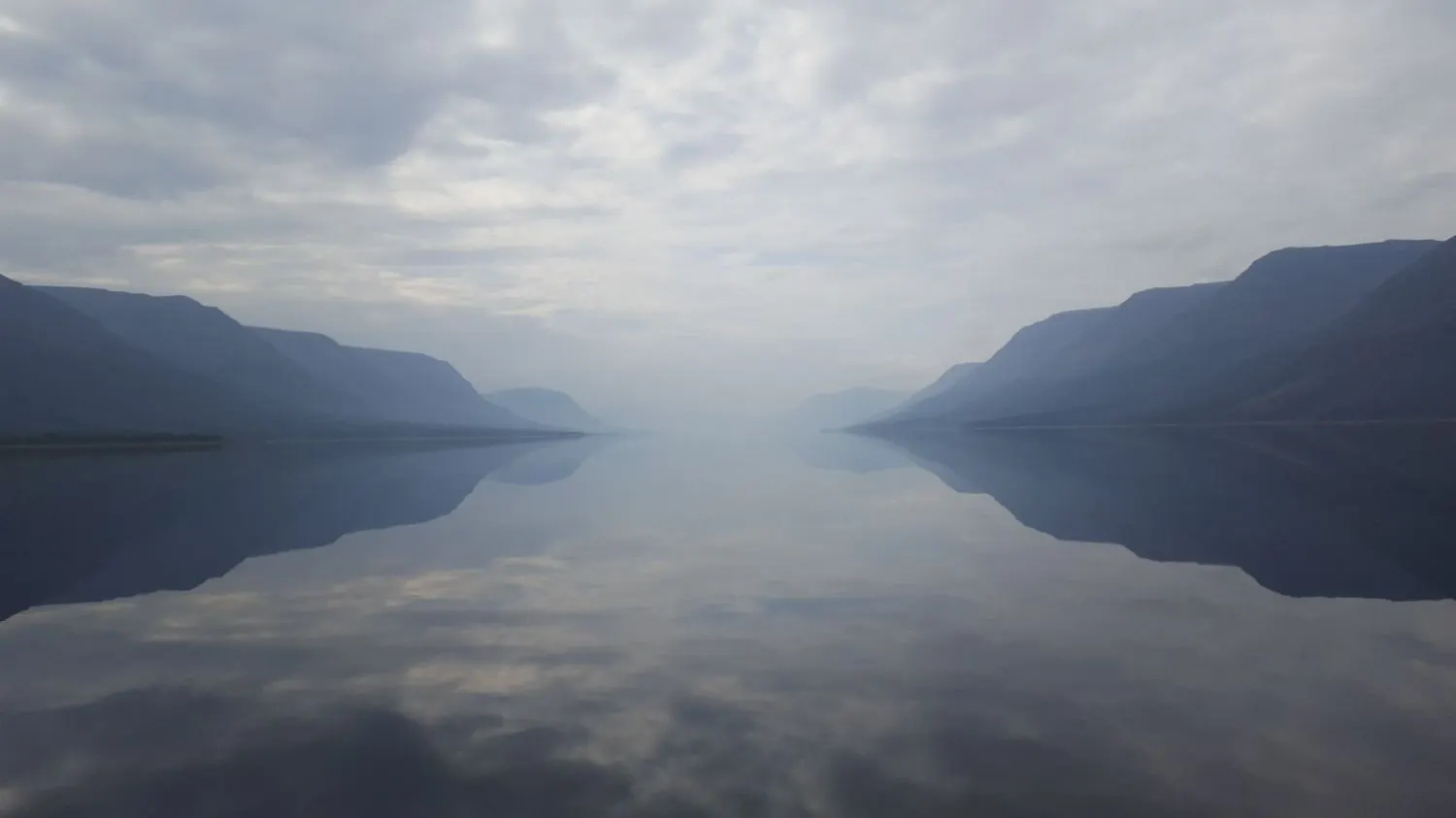
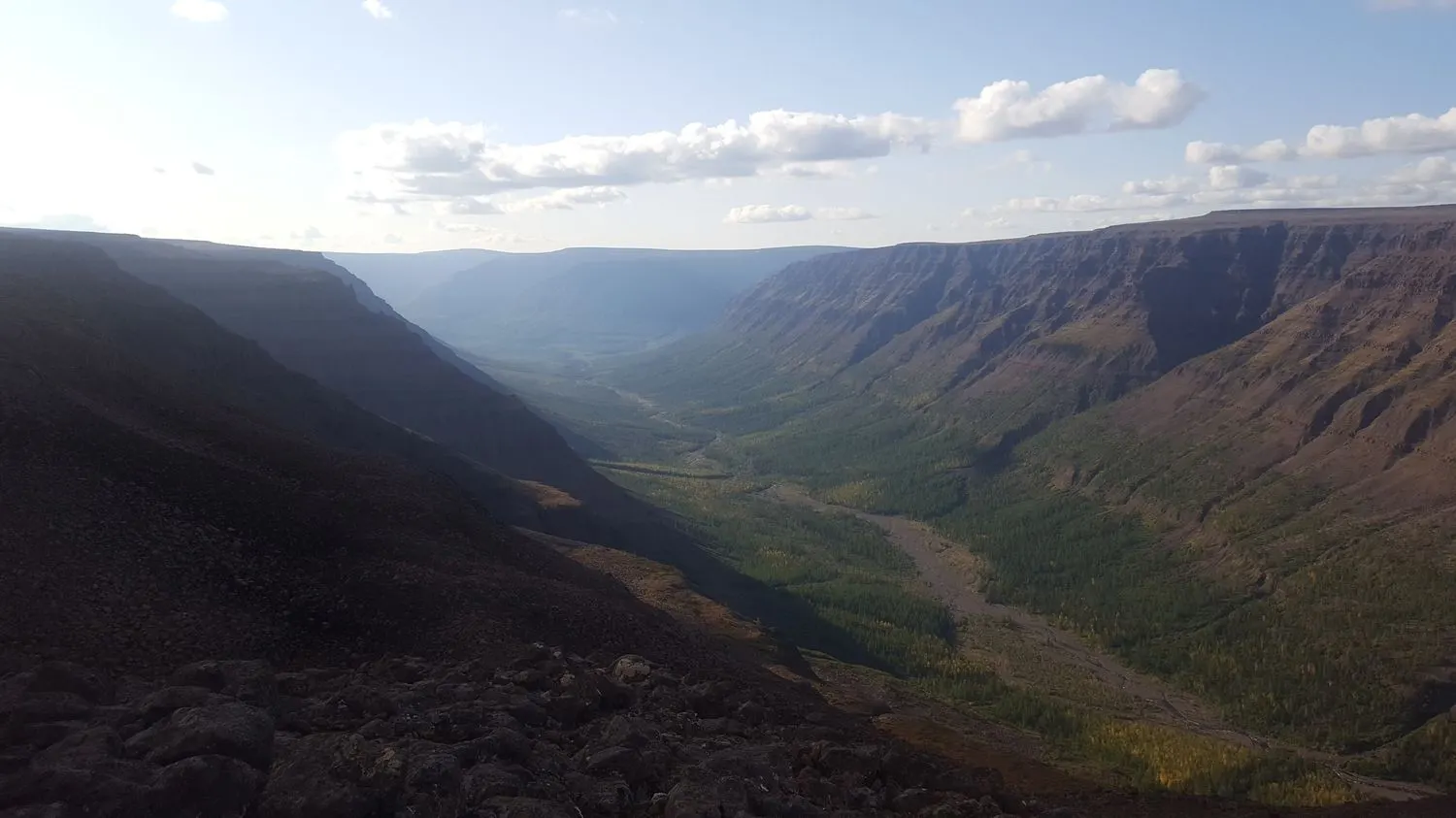
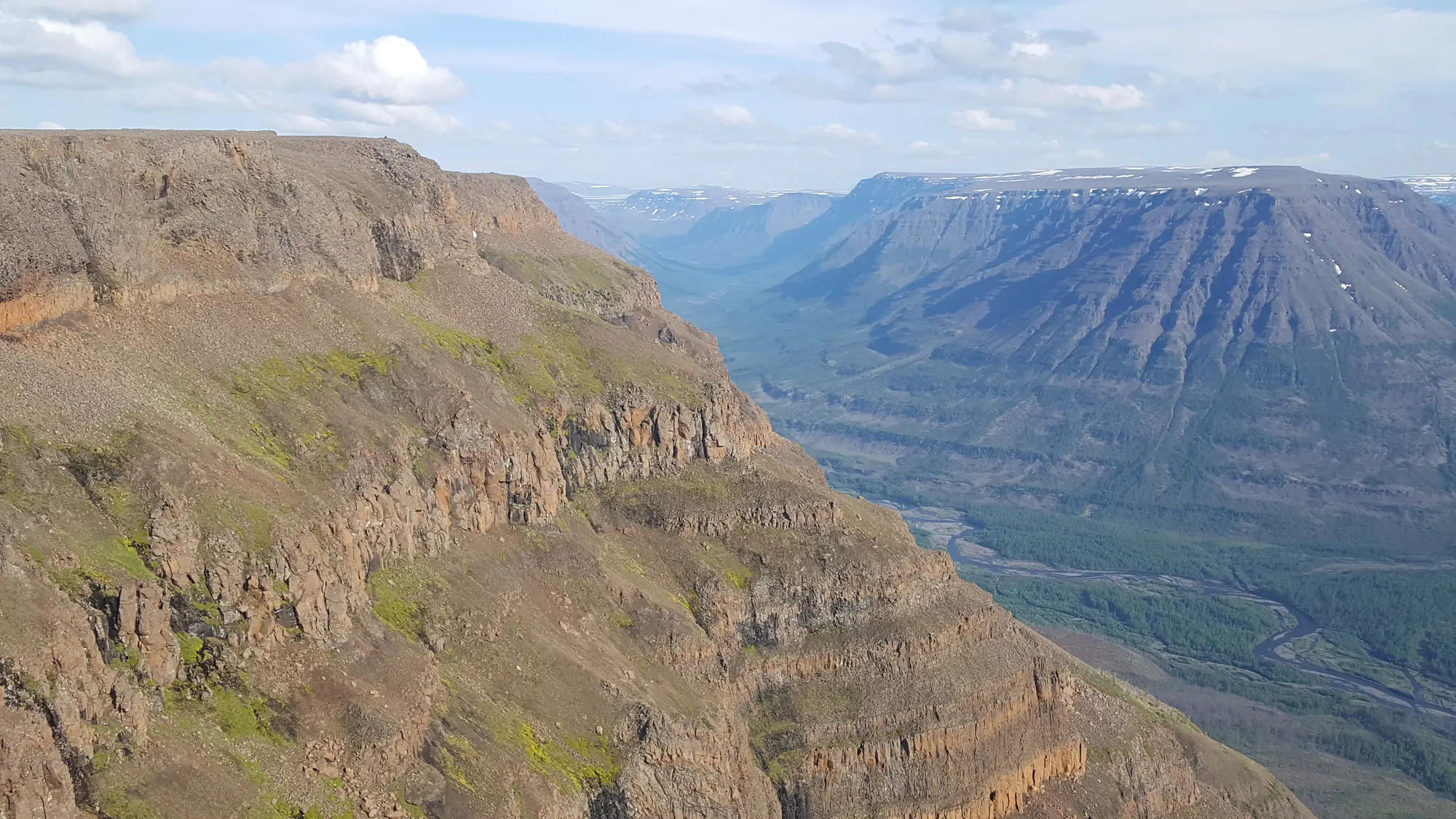
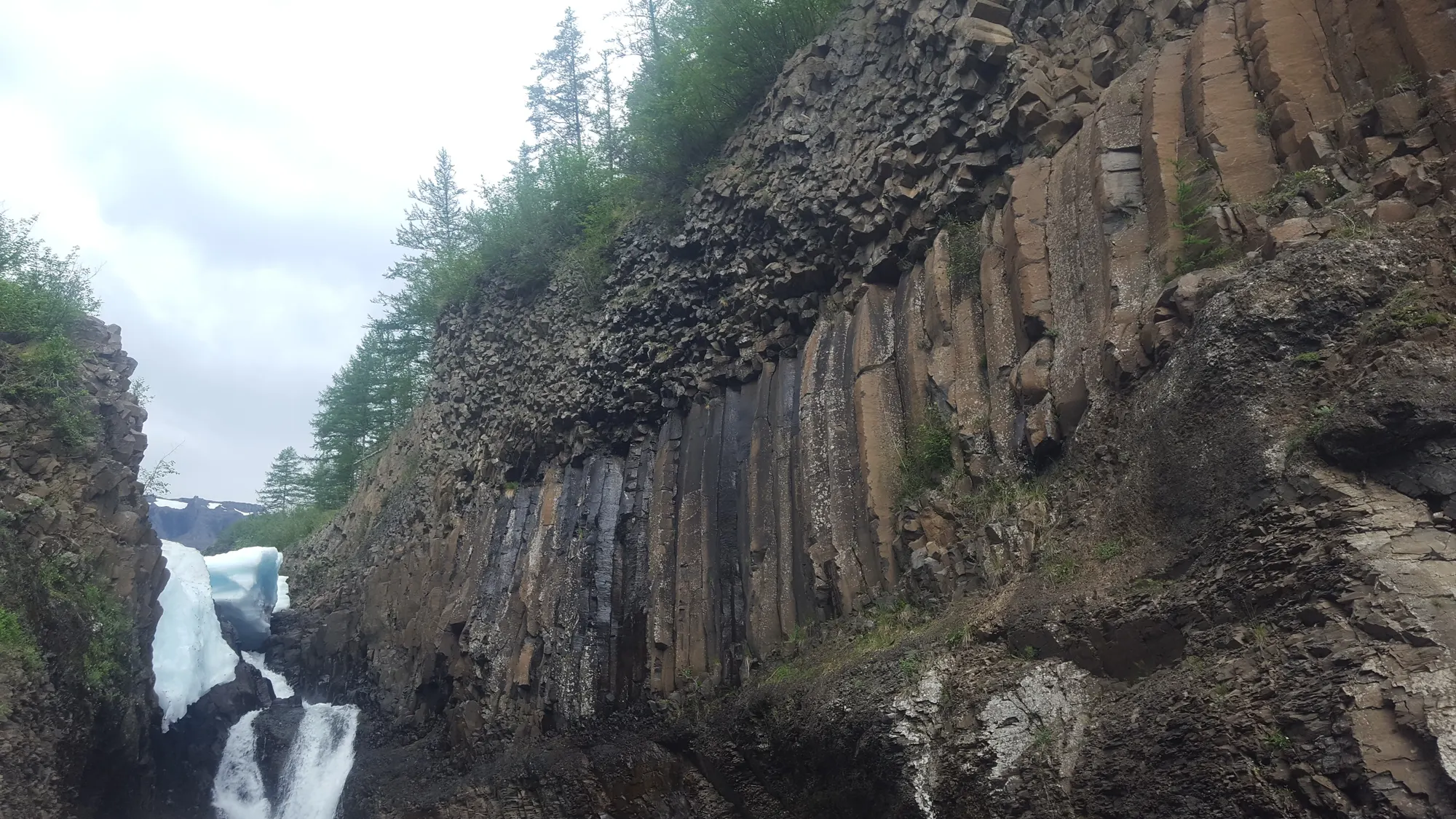
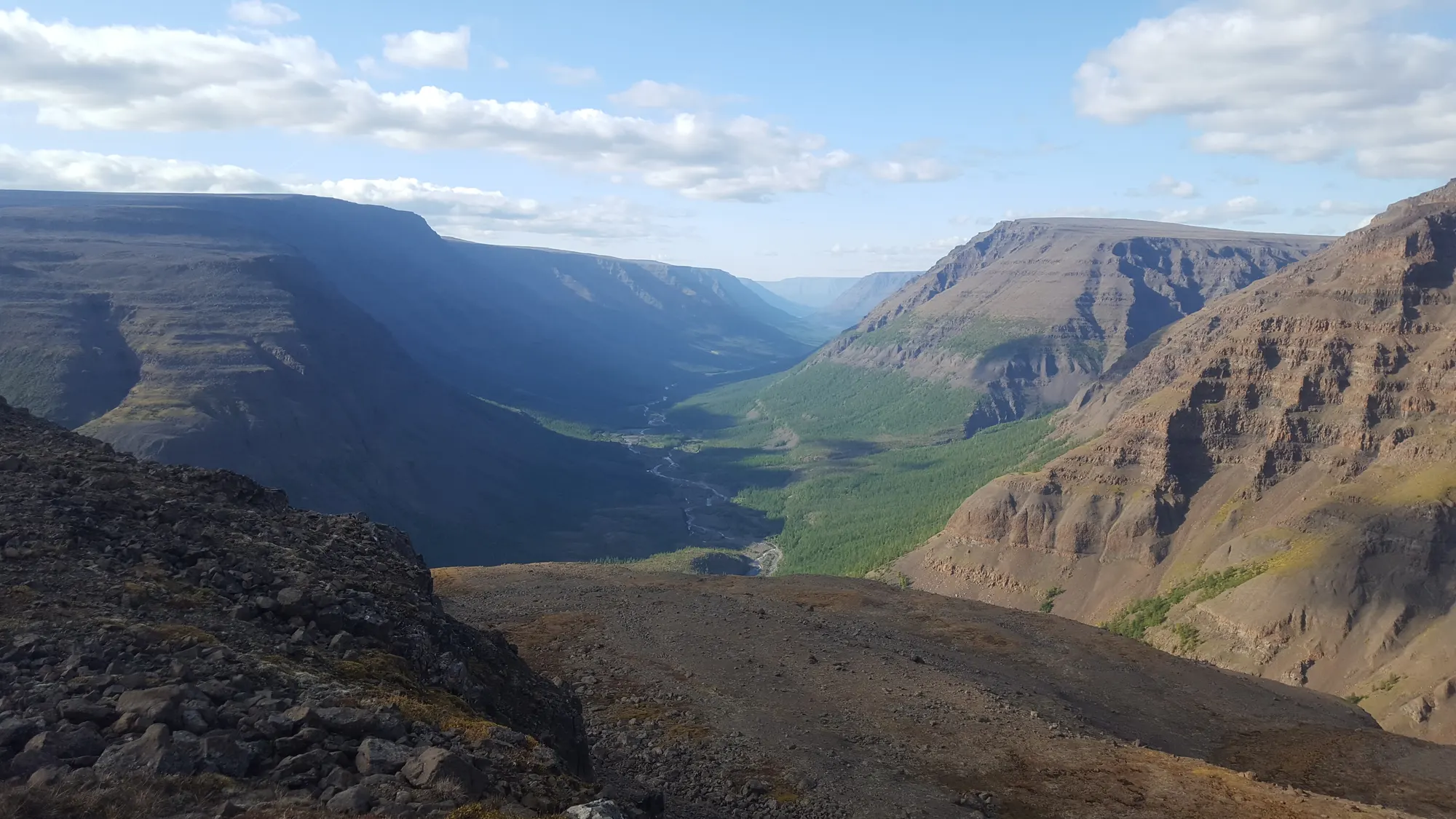
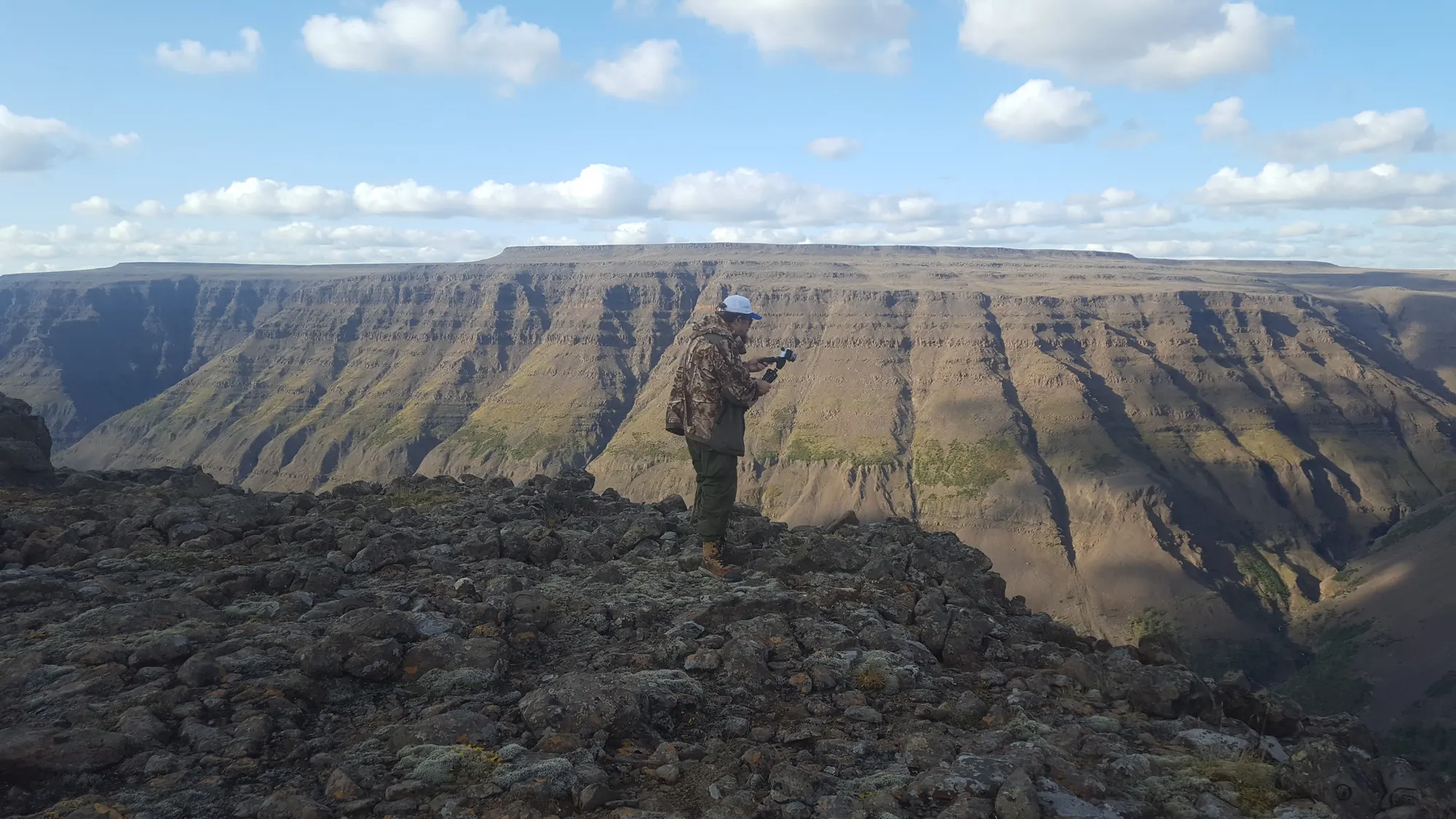
Around 250 million years ago, at the boundary between the Permian and Triassic periods, one of the largest volcanic events in the planet's history buried this part of Siberia under layer upon layer of basalt lava — the same eruption event known as the Siberian Traps. Over millions of years, rivers and glaciers cut into that solid rock, carving it into flat-topped mountains, roughly 1,000 metres high on average, deep canyons, and the terraced, stepped cliffs you'll see everywhere on this trip. The plateau covers roughly 250,000 square kilometres — an area comparable to the United Kingdom — making it the largest single mountain massif in the entire Russian Arctic. And while it has never been permanently settled, it has been used seasonally by indigenous groups for generations, and traces of that presence can still be found here today.
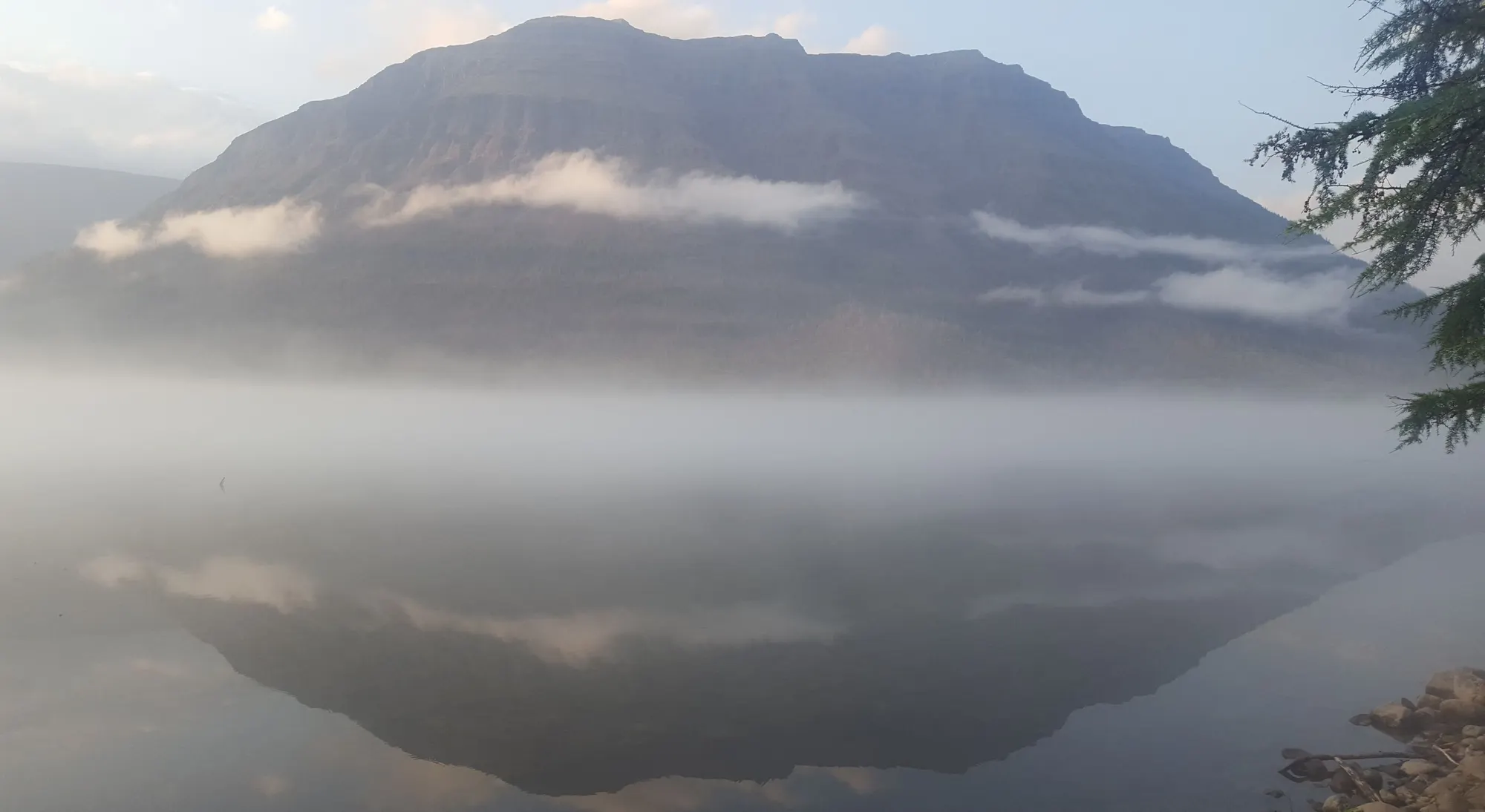
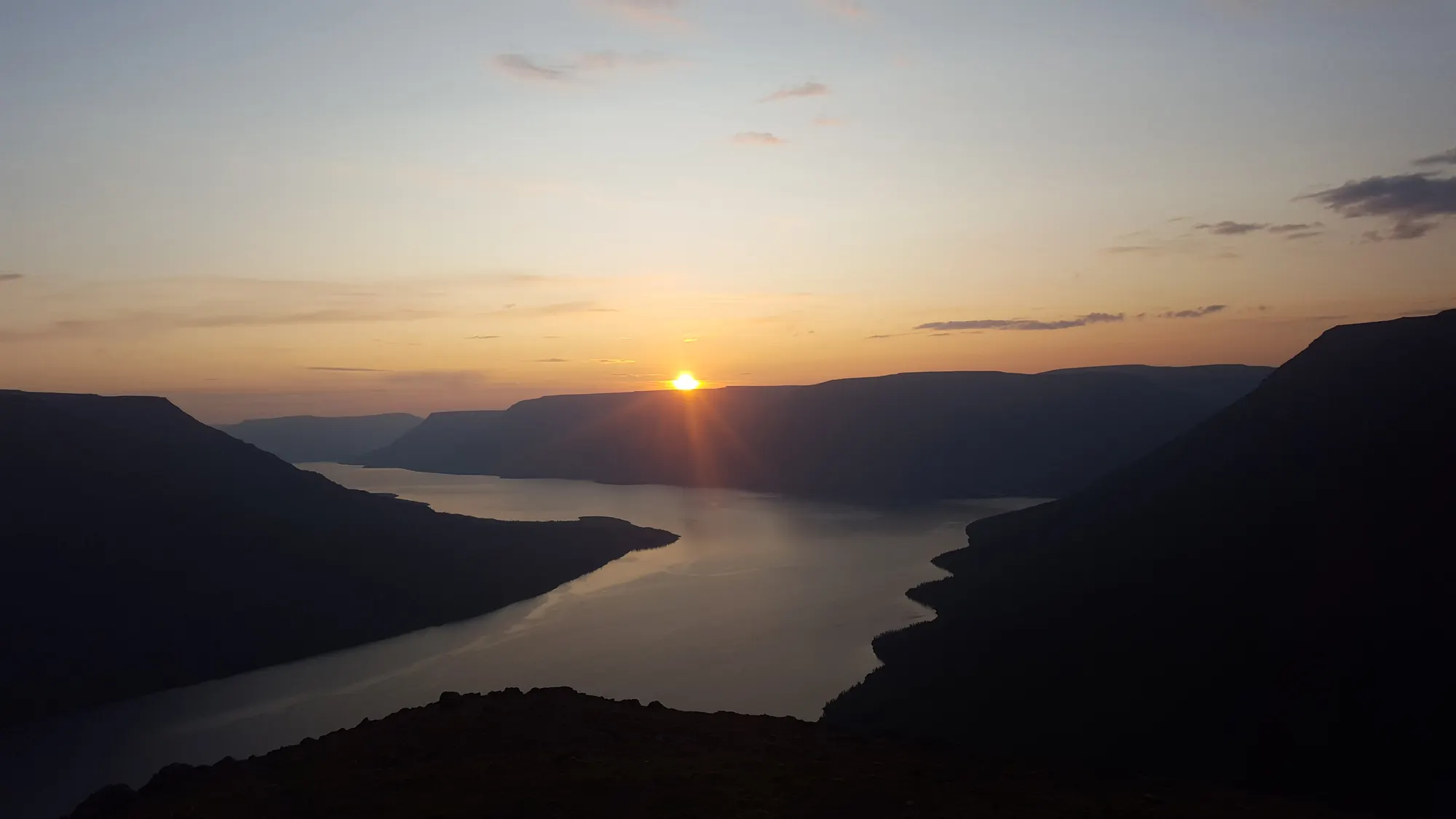
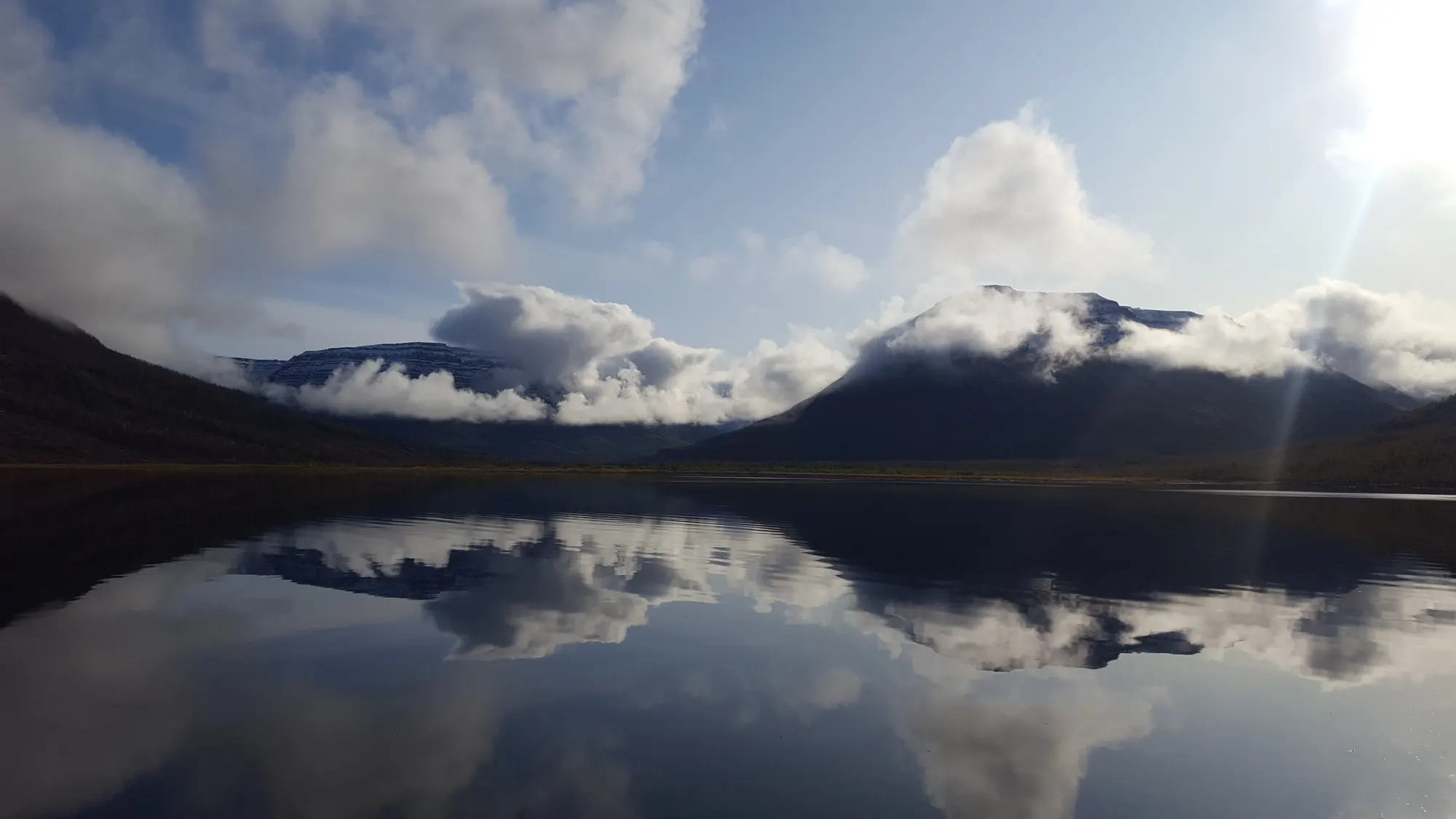
The plateau's basalt folds hold a vast network of lakes, many of them long and narrow like fjords — together making Putorana the second-largest reserve of fresh water in Russia after Lake Baikal. That same terrain is cut through by dozens of canyons and produces the highest concentration of waterfalls anywhere in the country, among them some of the tallest and most powerful waterfalls in Russia.
Putorana was added to the UNESCO World Heritage list in 2010, recognised for the scale of its untouched arctic and subarctic landscape and for sitting exactly where taiga forest meets open tundra — a transition zone that supports plant and animal life rarely found this far north.
The plateau's best-known and most mysterious resident is the Putorana snow sheep, a subspecies found nowhere else on Earth, cut off from the nearest other population by roughly a thousand kilometres. It's believed to have arrived here around 12,000 years ago and has remained isolated ever since. Recent surveys suggest fewer than a thousand animals survive today, and the subspecies is listed in Russia's Red Data Book as a population in decline — protecting it was one of the reasons the Putoransky Nature Reserve was established in 1988, and it remains part of why this landscape carries UNESCO status now.
One of the largest wild reindeer migrations left on the planet crosses the plateau every year, its skies are patrolled by eagles and arctic falcons, wolverines prowl the same slopes, and — as you'll notice from the berry-filled poo along the trails in August — bears share the same forests and river valleys.
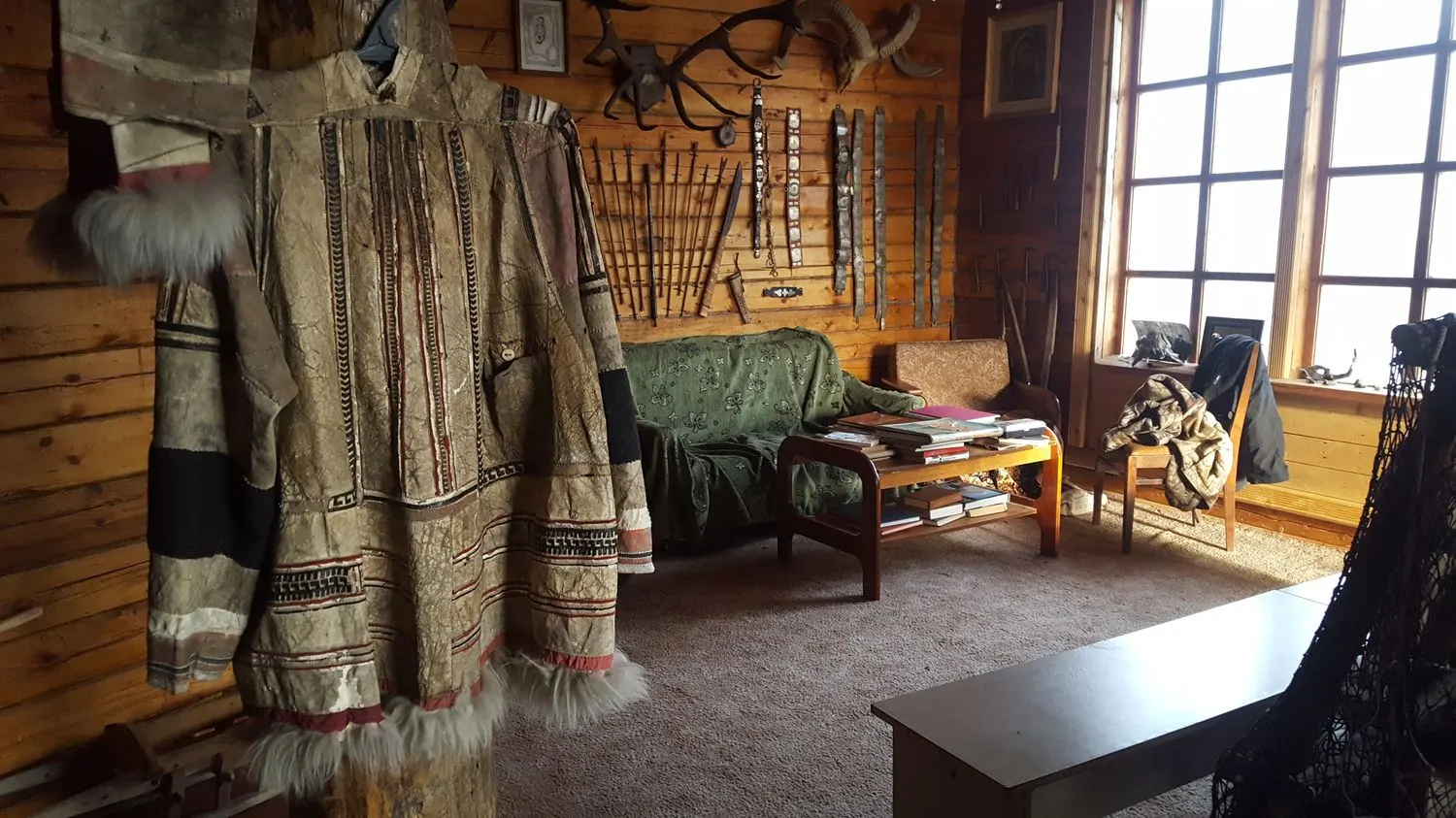
People have moved through this land for far longer than it's been mapped. The Nganasan, the northernmost indigenous people of Siberia, have deep historical ties to this region and to the wider Taymyr Peninsula. The base where we'll be staying holds the largest private ethnographic collection of Nganasan artifacts and antiques, alongside pieces from other indigenous peoples of the area — a subject we'll return to more than once during our storytelling evenings.
Beyond the Nganasan, the wider Taymyr region has long been shared by several other indigenous peoples of the North — including the Evenki, Nenets, Enets, and Dolgans — each with its own language, migration routes, and history here.
Not all the ice has melted yet. Ice floes still drift across the lake, and snow lingers on top of the plateau, slowly feeding the rivers and waterfalls, which grow more powerful by the day as it melts. The weather is already warm, and the mosquitoes haven't arrived yet — this is also when Ivan-chai is ready to pick, and spending some time gathering it makes for a nice experience and a tasty souvenir. The polar day is in full swing: the sun never fully sets, and the sky stays bright 24 hours a day.
As the weather warms further, the last of the ice disappears — but the air fills with mosquitoes, sometimes in genuine clouds. A head net (a fine mesh net worn over a hat, covering the face and neck) is a very helpful, almost essential piece of gear for this stretch.
The sun starts dipping below the horizon again — just briefly at first, a little longer with each passing day. The nights stay light for a while yet, growing gradually darker through August.
The mosquitoes are finally gone, and the forest fills with berries. Walking through the woods picking them — and eating them right afterward — is one of the simplest pleasures of the trip. Bears enjoy them too, and you'll often spot bear poo full of berry seeds along the trails.
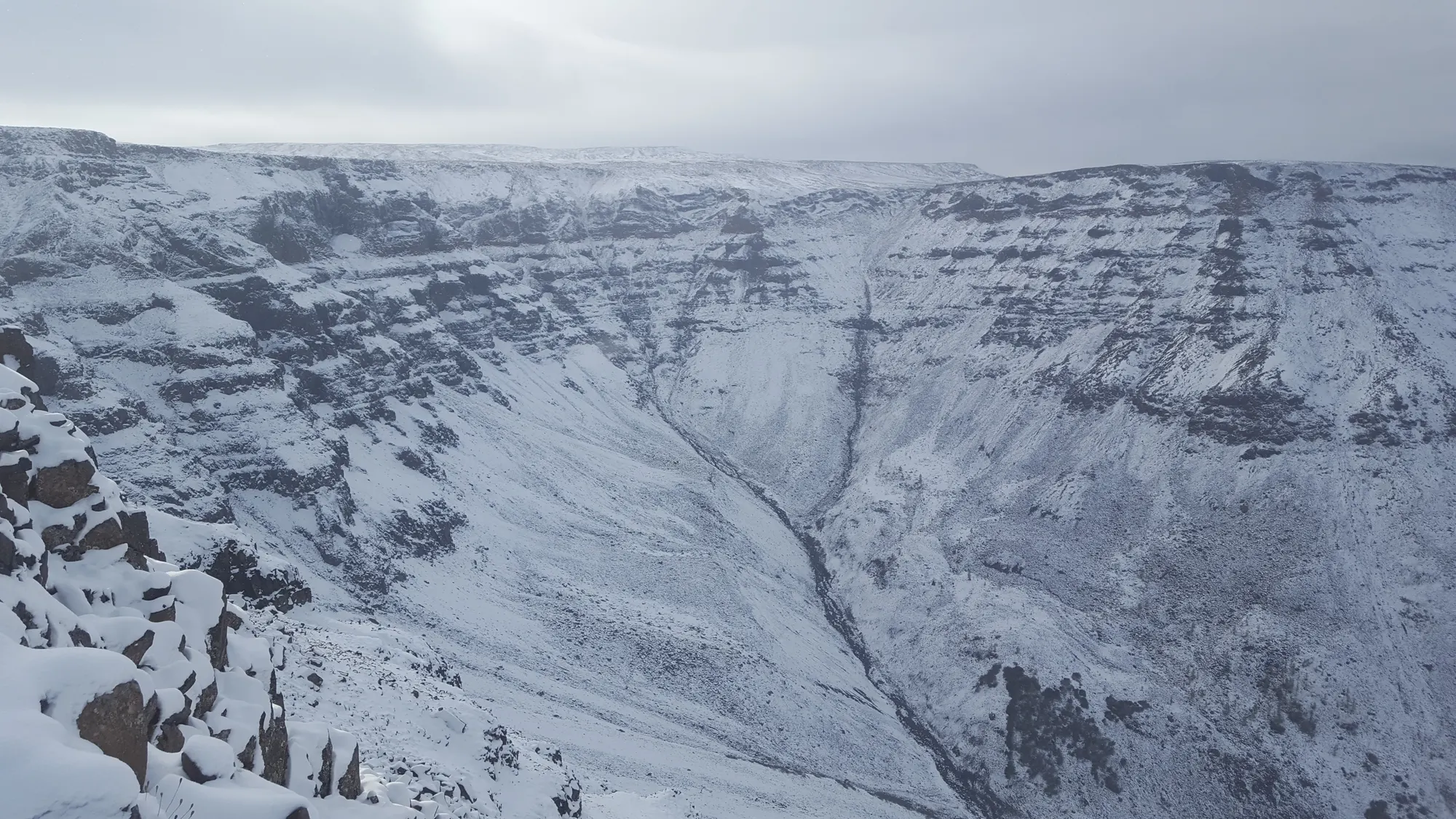
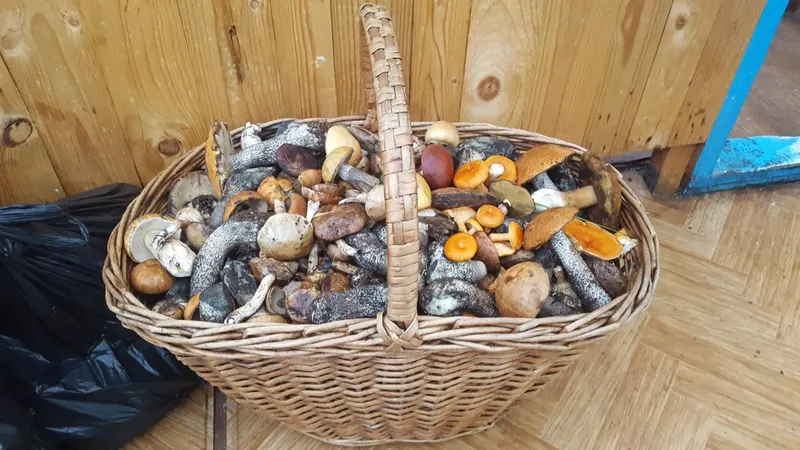
The nights turn properly dark again, and the air cools. Mushrooms take over, and foraging for them is a slow, quietly rewarding way to spend a morning. This is also aurora season — on a clear night, with a little patience, the sky lights up overhead. Then the snow returns, and the cycle begins again.
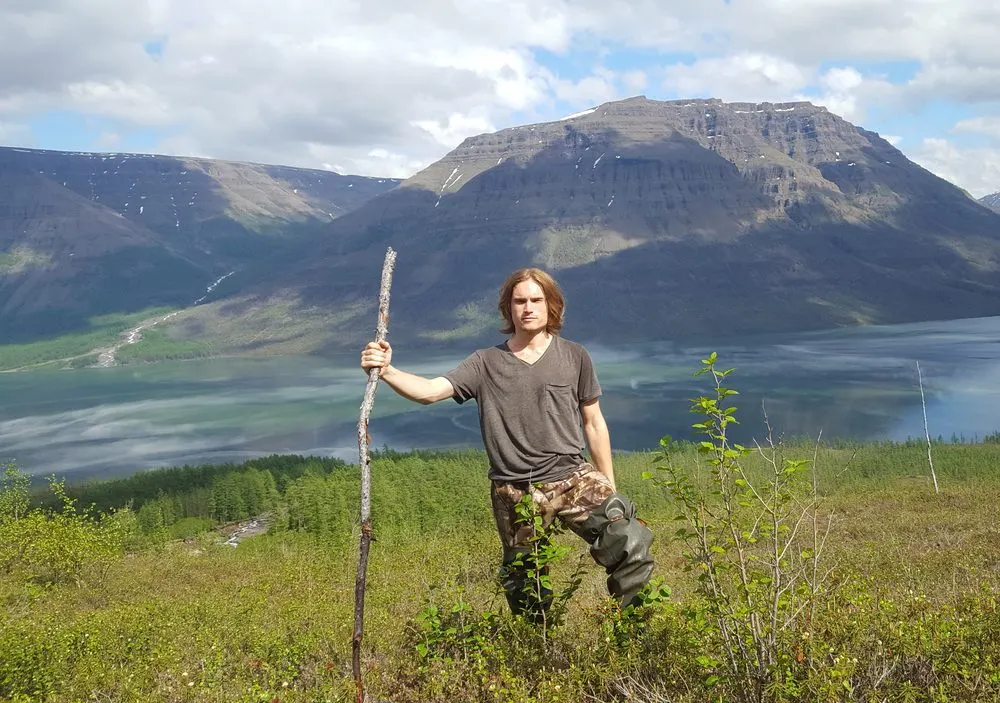
The Putorana Plateau isn't a place you visit by accident — but when I first went, I knew nothing about it, or its surroundings, or anything related to it. Zero. I just wanted to meet the founder of the base: a shaman.
The logistics made it challenging to get there, and one day he offered me the chance to spend some months at the base, guiding people on treks, while in the evenings I would listen to his stories, absorbing his knowledge, understanding his practices, and simply being in his aura of endless love for the plateau.
Now that he's unfortunately gone, his extraordinary life, stories, and knowledge I will be sharing with you during our evenings together.
More about me: igormikhaylov.com
Adventurers who love trekking and hiking — from easy walks to extreme expeditions, which can be arranged separately.
Anyone drawn to unspoiled nature, arctic wilderness caught between taiga and tundra.
Anyone looking to get away from mass tourism — this is a full digital detox.
Photographers, both wildlife and landscape — dedicated photo tours can be arranged.
If you're looking for luxury, this isn't it.
If you can't disconnect — no internet, no phone signal. If you need to stay reachable for work or family, this is going to be hard.
The easiest way to reach the plateau is to fly into the city of Norilsk from Moscow — and that's where the first real logistical step comes in. Norilsk is a city with special status, sitting inside one of several restricted-access areas of Russia, where non-Russian citizens need a special permit to enter — one of the clearest signs of how far off the map this trip really goes.
Almost the entire plateau is still cut off from the outside world, and the central reaches can only be accessed by helicopter or by treks that take days or weeks, which keeps it off-limits to almost everyone. The furthest place you can reliably get to is the south-eastern shore of Lake Lama, where the base is, and where I'll be taking you.
The most practical way to handle this is once the whole group is confirmed: at that point, we apply for everyone's permits together.
In short: you take care of your Russian visa, and once the group is set, we take care of the permit.
We meet at the airport and fly to Norilsk, spending our first day there, visiting a few key spots around the city and picking up any last supplies or equipment before heading to the base.
The next day, we set off for the base where we'll be staying — on the south-eastern shore of Lake Lama, the furthest point that is possible to reach by transport within the plateau. Once we arrive, we settle into our rooms, with two or three beds each. The house itself and its founder have an extraordinary history: stories I'll share during our evenings there. The base is also home to the largest private ethnographic collection of Nganasan artifacts and antiques — there will be plenty of time over the following evenings to hear more about them.
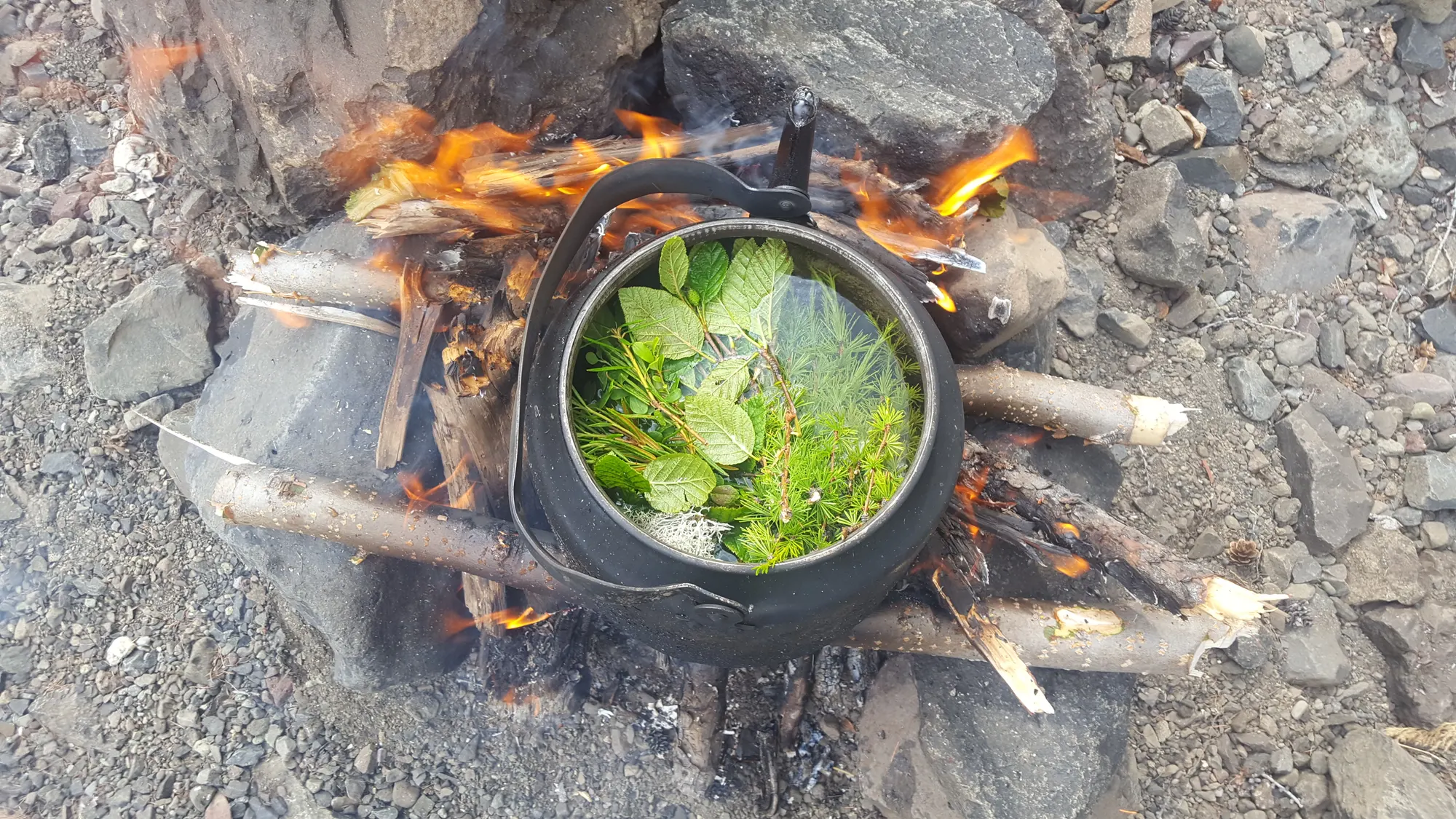
After breakfast at the base, we head out each day onto a different trek. At the end of each route we stop for snacks and make herbal tea, rest for a while, then make our way back to the base where we'll enjoy a proper dinner, a beautiful sauna, a dip in the lake for the braver ones, and other activities.
We return to Norilsk and spend the night there. The next day, we visit the nearby city of Dudinka, then fly back to Moscow.
We meet at the airport in Moscow, fly to Norilsk and transfer to the base.
A shorter warm-up route lets me get a feel for the group's pace and fitness before we head into the valley.
Four days on foot, camping each night, walking the length of the Khoysi valley — river crossings, forest-tundra, and a push above the treeline to a mountain lake near the river's source, before turning back the way we came.
The trek back out, a proper sauna once we're at the base again, then back to Norilsk. A day is held in reserve for weather delays, then the transfer to the airport.
This isn't a day-pack trip — you're carrying your own gear for four days, so the list is longer than the base expedition's.
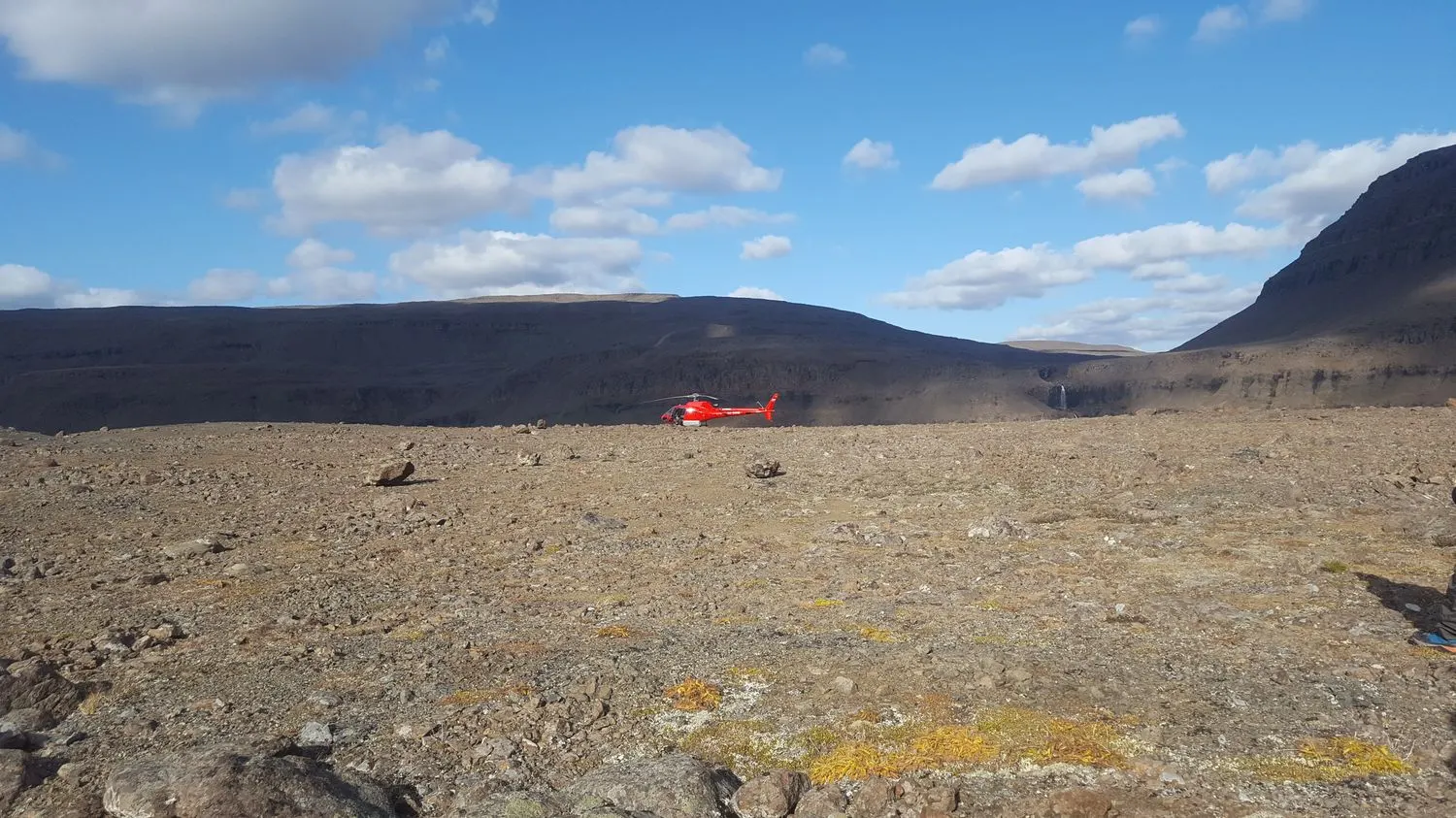
For those who want to go even further, a helicopter tour can be arranged during the trip — a chance to reach the most remote parts of the plateau, and see some of its most scenic canyons and waterfalls.
Price and arrangements for this tour are discussed privately.
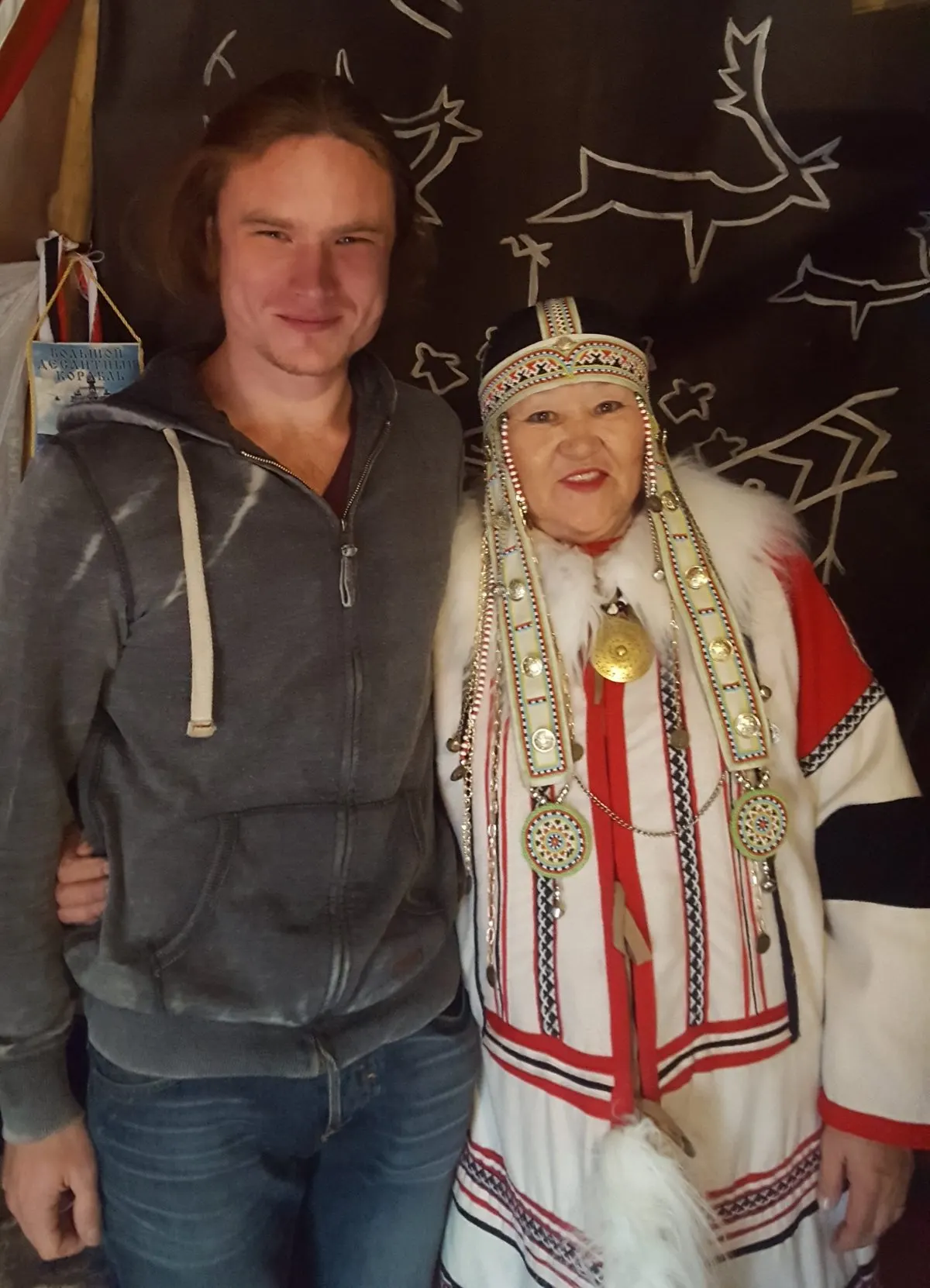
With a Nganasan woman in traditional dress, inside a chum (traditional tent)
Terraced basalt cliffs above a wide green valley
Herbal tea brewing over the fire
Basalt columns and a waterfall beside the last of the ice
Mist on the lake, Mount Shaitan mirrored in the still water
Sunset over a fjord-like lake, from the top of the plateau
Looking down a long valley from a remote corner at the top of the plateau
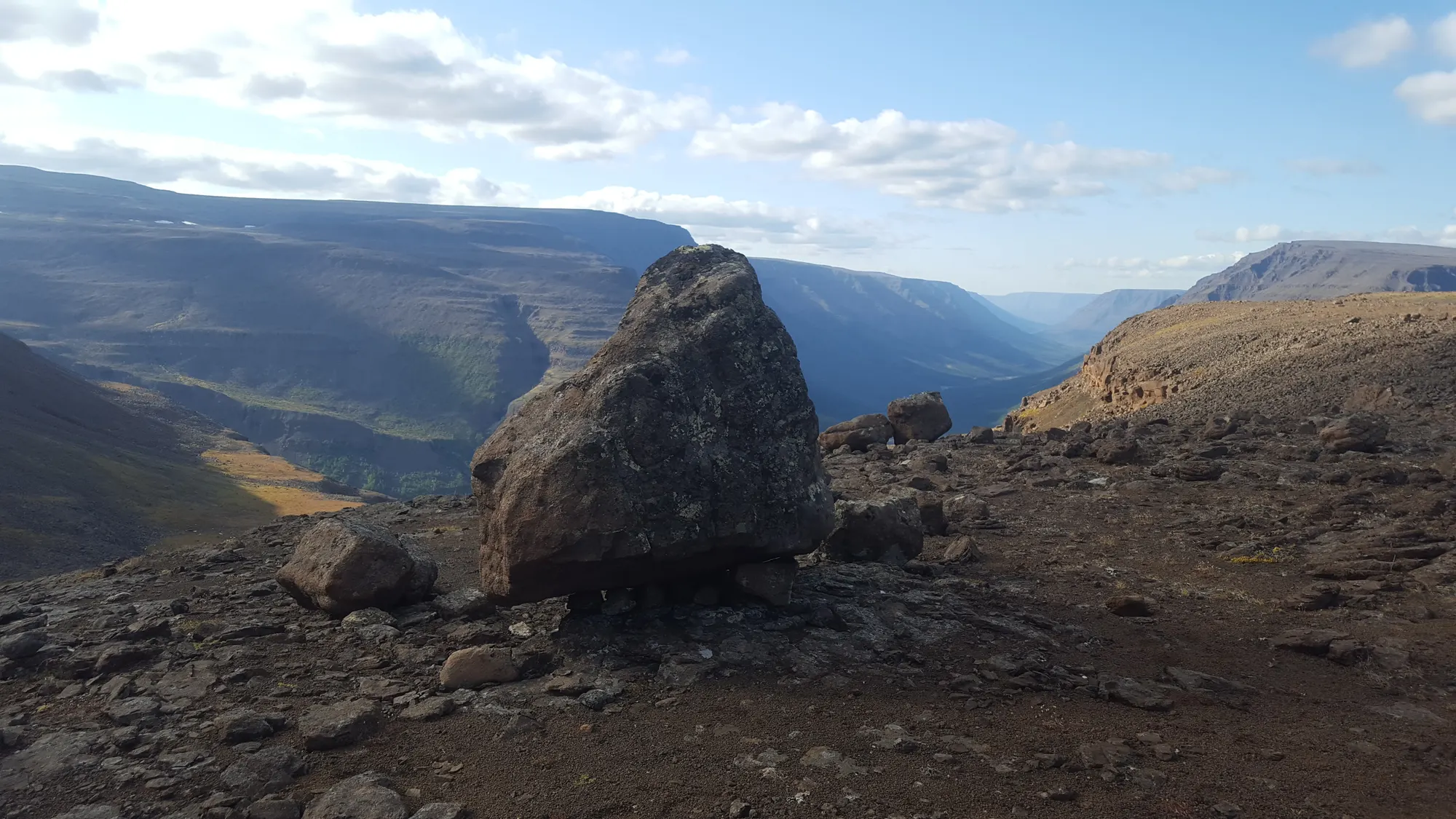
A Sieidi-like stone on the edge of the plateau
The founder of the base, facing the stepped canyon walls
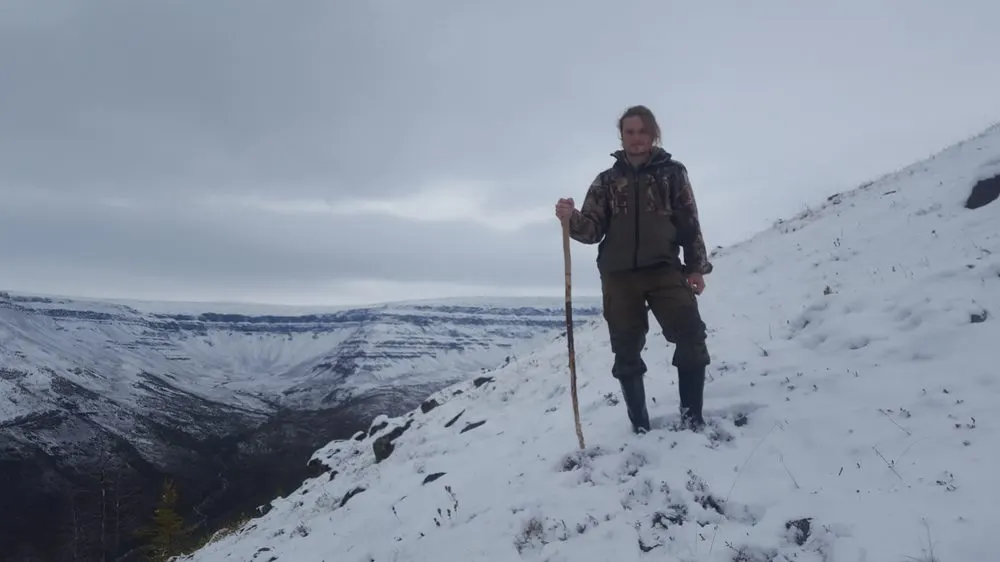
Early snow on the canyons in September
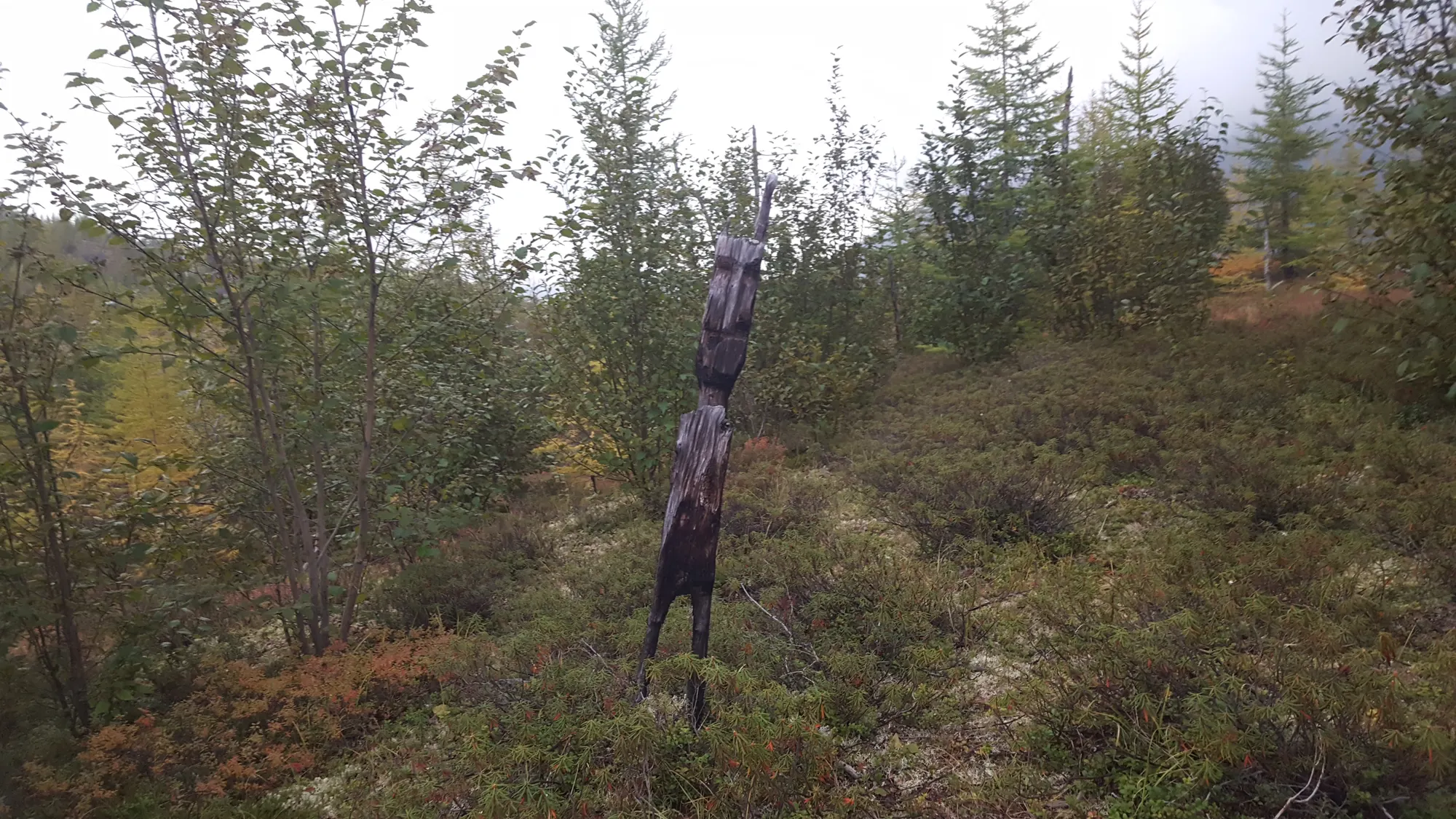
An ancient Evenk guardian figure in the autumn forest
Clouds and mountains mirrored in the lake